
A coherent exhibition language
The animation was developed to sit naturally alongside the exhibition identity, using the Gallery's established palette and design direction while adding movement, rhythm, and narrative clarity.


National Gallery / Titian foyer projection
Sentio Space created a large-scale projection for the National Gallery that introduced Titian's Poesie paintings with elegance, precision, and a design language coherent with the exhibition environment.
The projection had to work in seconds for visitors passing through the foyer, while giving those who stayed a richer sense of how Titian's mythological paintings travelled across Europe and beyond before coming together in London.
Full project film
The full film combines a gallery-grade visual tone with clear narrative sequencing, helping visitors understand the significance of the Poesie series before entering the exhibition.
Watch on VimeoThe National Gallery wanted a short animation for the exhibition foyer: something visitors could watch while queuing, and something compelling enough to encourage wider interest in the exhibition. The idea was clear and ambitious: the six paintings had not been together since Titian first created them, and the foyer projection needed to make that significance immediately legible.
Sentio Space worked directly with Belinda Philipot, Creative Director of the National Gallery, and Karoliina Hujanen, Exhibition Designer, to develop an animation that belonged inside the exhibition's own visual world. The colour, typography, pacing, and treatment of the paintings had to feel coherent with the wider gallery design rather than like a separate promotional layer.
The result needed restraint as well as impact. Seen briefly, it had to look elegant in the National Gallery setting. Watched more closely, it had to educate visitors on how Titian's Poesie paintings moved through different collections and cities over the last 500 years before eventually being brought together in London.
The animation was developed to sit naturally alongside the exhibition identity, using the Gallery's established palette and design direction while adding movement, rhythm, and narrative clarity.
The film had to carry art-historical information without becoming dense. Movement, maps, captions, and image transitions were used to clarify the journey of the paintings while preserving the sensuous force of Titian's imagery.
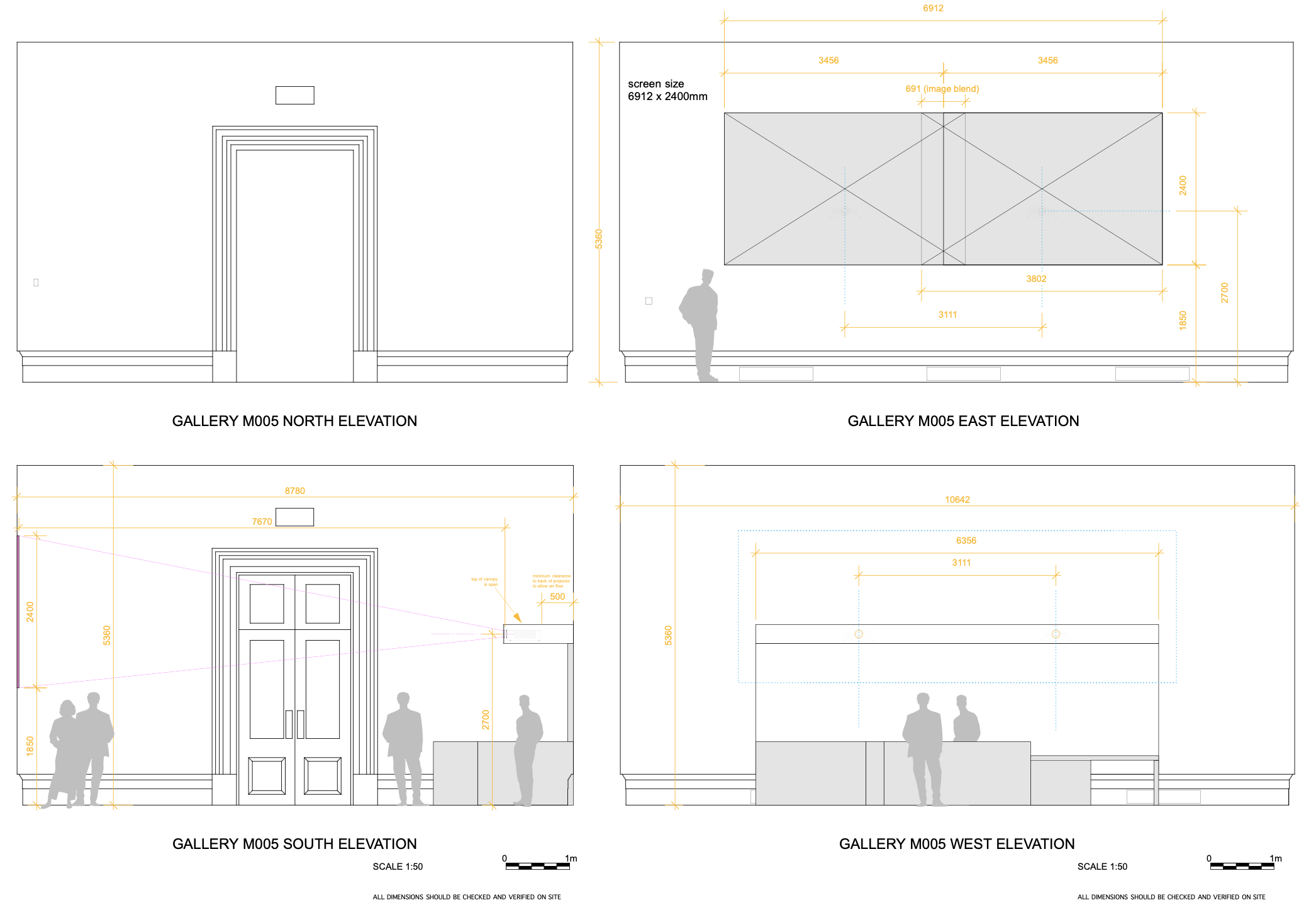
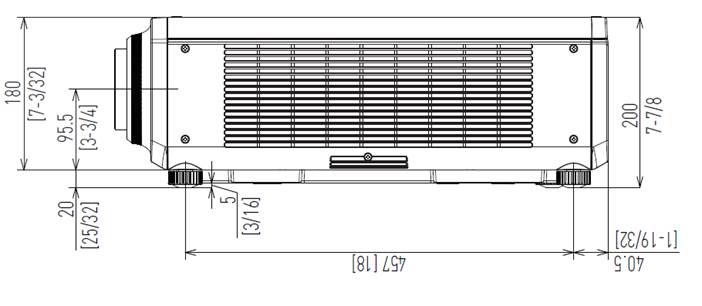
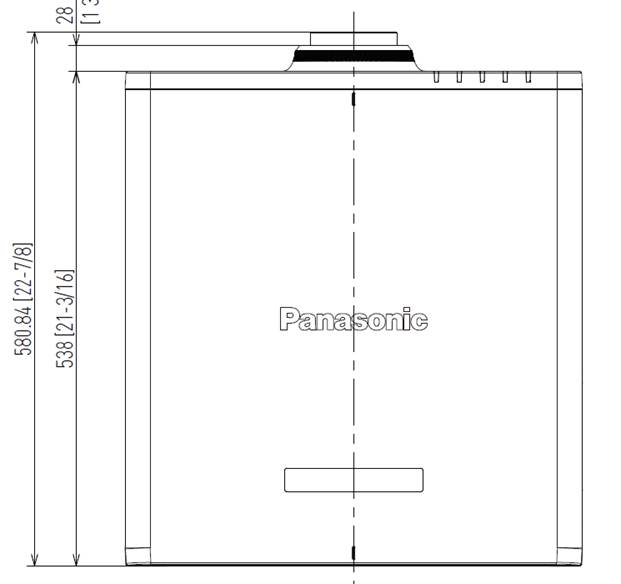
The projection was not a standard single-screen deliverable. The installation required two projectors so the animation could span a wide wall in the foyer, which meant the design had to account for scale, alignment, overlap, brightness, and legibility from different viewing positions.
We treated the technical specification as part of the creative work. Compositions were planned for a broad horizontal field and built so the two films could be projected side by side with no visible join, while maintaining enough contrast for the image to hold its authority in a public gallery environment.
This combination of visual refinement and projection discipline was central to the project: the work needed to feel effortless to visitors, while absorbing the practical complexity required to make it look precise in situ.
Titian called these paintings his Poesie because he thought of them as visual equivalents of poetry. The exhibition brought together mythological scenes of love, temptation, punishment, discovery, and transformation, drawn largely from Ovid's Metamorphoses.
Our task was to respect that emotional and scholarly weight while making the story accessible at the point of arrival. The animation used Titian's beautiful imagery, controlled transitions, and careful sequencing to turn a complex exhibition history into a calm, persuasive introduction.
For Sentio Space, the project brought together the qualities that matter in cultural work: sensitivity to place, accuracy of content, dependable delivery under technical constraint, and the ability to make difficult stories feel clear without reducing their depth.
Case Study
.png)
Sentio Space won a competitive tender against 35 studios to create the Science and Industry Museum's illustration, animation and interactive media system for one of Britain's most important working-engine galleries.
View the case studyCase Study

For Tate Modern, Sentio Space developed painterly moving-image responses that extend the atmosphere and emotional force of The Expressionists.
View the case studyCase Study

The Spirit of Play shows how Sentio Space can give academic ideas warmth, clarity, and a quietly joyful visual tone.
View the case studyCase Study

Sentio Space created a vivid BBC explainer that turns a complicated energy story into something immediate, memorable, and easy to grasp.
View the case studyCase Study

For the National Gallery, Sentio Space shaped an elegant Leonardo story that brings technique, context, and close looking into one cinematic experience.
View the case study